

ARTICLES
May 13, 2026
BERNAYS vs. ADLER: The Soul of Marketing
Proven legal marketing strategies from Honorable Marketing. Learn how solo and small law firms use AI, SEO, and smart systems to attract more clients and domina
July 2, 2024
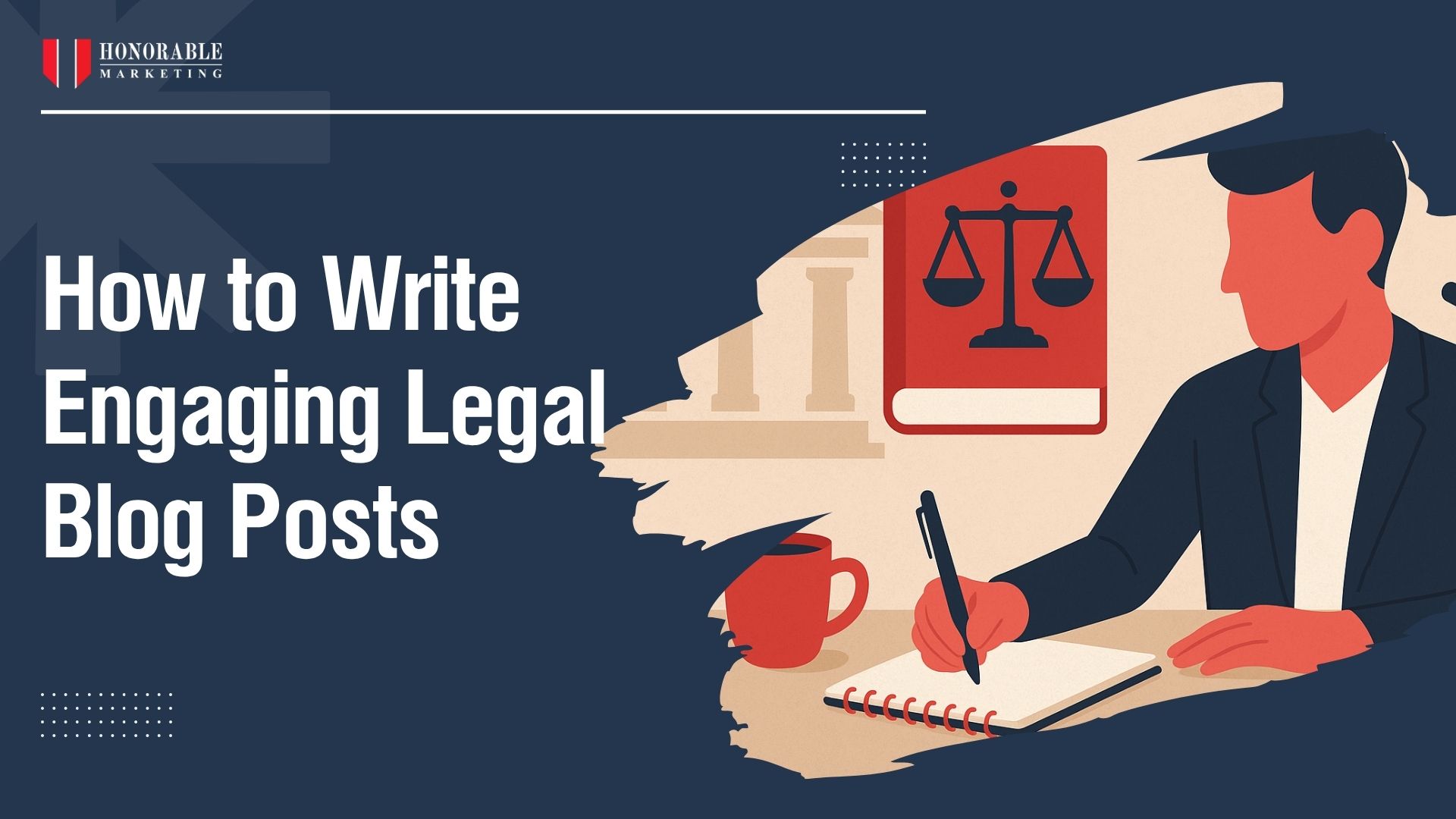
Hello, legal scribes and content creators! Are you ready to transform your legal blog into a captivating hub that keeps readers hooked and coming back for more? Writing engaging legal blog posts can be a tricky endeavor – it’s a delicate balance between being informative and entertaining while maintaining the professionalism that your legal practice demands. But fear not! We’re here to guide you through this process with a blend of humor, practicality, and a dash of 90s nostalgia. Let’s get started!
Before you put pen to paper (or fingers to keyboard), it’s crucial to understand who you’re writing for. Knowing your audience is like knowing the jury – it helps you tailor your message effectively.
Use analytics tools to understand your audience’s behavior on your website. This can provide insights into what type of content resonates most with them.
Once you know your audience, it’s time to choose topics that will interest them. Think of your blog topics as the cases you decide to take on – they should be relevant, timely, and of interest to your audience.
Use tools like Google Trends, Answer the Public, and social media to find trending topics and questions related to your practice area.

Your blog post title is like the opening statement in court – it needs to grab attention and set the stage for what’s to come. A great title can mean the difference between a reader clicking through or scrolling past.
Test different title variations using tools like CoSchedule’s Headline Analyzer to see which ones score the highest.
Now, onto the main course – your content. It’s where you blend information with entertainment, ensuring that your readers are both educated and engaged.
Use the Flesch-Kincaid readability test to ensure your content is easy to read. Aim for a score that’s accessible to the average reader.
SEO is the unsung hero of engaging blog posts. It’s what helps your content get found by potential clients who are searching for legal information online.
Use tools like Yoast SEO for WordPress to help optimize your content for search engines.
A great blog post not only informs and entertains but also guides the reader on what to do next. This is where your call to action (CTA) comes in.
Place your CTA in a prominent location – at the end of your post, in a sidebar, or even as a pop-up.
Writing an engaging blog post is only half the battle. Promoting it effectively ensures that it reaches your target audience.
Use a content calendar to plan and schedule your blog promotion activities. Consistency is key!
The journey doesn’t end once your blog post is published. Analyzing its performance and making continuous improvements ensures long-term success.

Regularly update your blog posts with new information, examples, and keywords to keep them fresh and relevant.
There you have it – your ultimate guide to writing engaging legal blog posts. Remember, the key to success is understanding your audience, choosing relevant topics, crafting captivating titles, and creating content that’s both informative and enjoyable.
Optimize for SEO, add compelling CTAs, promote your content, and continuously analyze and improve. With these strategies in your toolkit, you’ll turn your legal blog into a powerful platform that attracts and retains clients.
Ready to take your legal blog to the next level? Contact us today for personalized blogging strategies that will help you engage your audience and grow your practice. Let’s make your blog the go-to resource for legal insights and advice!
This article was produced by the editorial team at Honorable Marketing, a veteran-owned digital marketing agency working exclusively with personal injury attorneys and small law firms across the United States. Our strategies comply with ABA Model Rules of Professional Conduct and applicable state bar advertising guidelines — particularly Rules 7.1 through 7.5 governing attorney advertising, solicitation, and communication about services.
Attorneys should review their specific state bar Rules of Professional Conduct before implementing any marketing campaign, especially regarding testimonials, case results, fee representations, and comparative advertising. For a personalized strategy session, contact Honorable Marketing here.
Solo and small firm attorneys compete by deploying precision tactics that large firms cannot execute at scale. Local SEO, niche authority content, AI-powered intake automation, and systematic review acquisition all favor the agile solo practitioner. Big Law's budget buys broad awareness. Your strategy buys specific clients — and specific clients convert.
Timeline varies by channel. Google Local Services Ads and paid PPC can generate leads within 72 hours of launch. Local SEO and Google Maps optimization typically show measurable improvement in 60–90 days. Organic content authority and backlink building require 6–12 months of consistent execution. The firms with the strongest long-term results combine all three: immediate paid wins, medium-term local SEO, and long-term content authority.
For most solo attorneys, fully optimizing your Google Business Profile and building a systematic review acquisition process delivers the highest ROI at the lowest cost. It is free to use, directly affects local pack rankings, and requires ongoing maintenance rather than ongoing spend. Once your local presence is strong, layer in paid advertising and content marketing to amplify results.
Track cost-per-lead, cost-per-consultation, and cost-per-signed-case by channel — not impressions, clicks, or pageviews alone. Use call tracking software (CallRail, WhatConverts), form conversion events in Google Analytics 4, and a CRM that records lead source at intake. Review these numbers monthly. Cut channels that consume budget without producing consultations. Double down on channels with the lowest cost-per-case.